MOTS-C/GHK-CU/KPV Blend
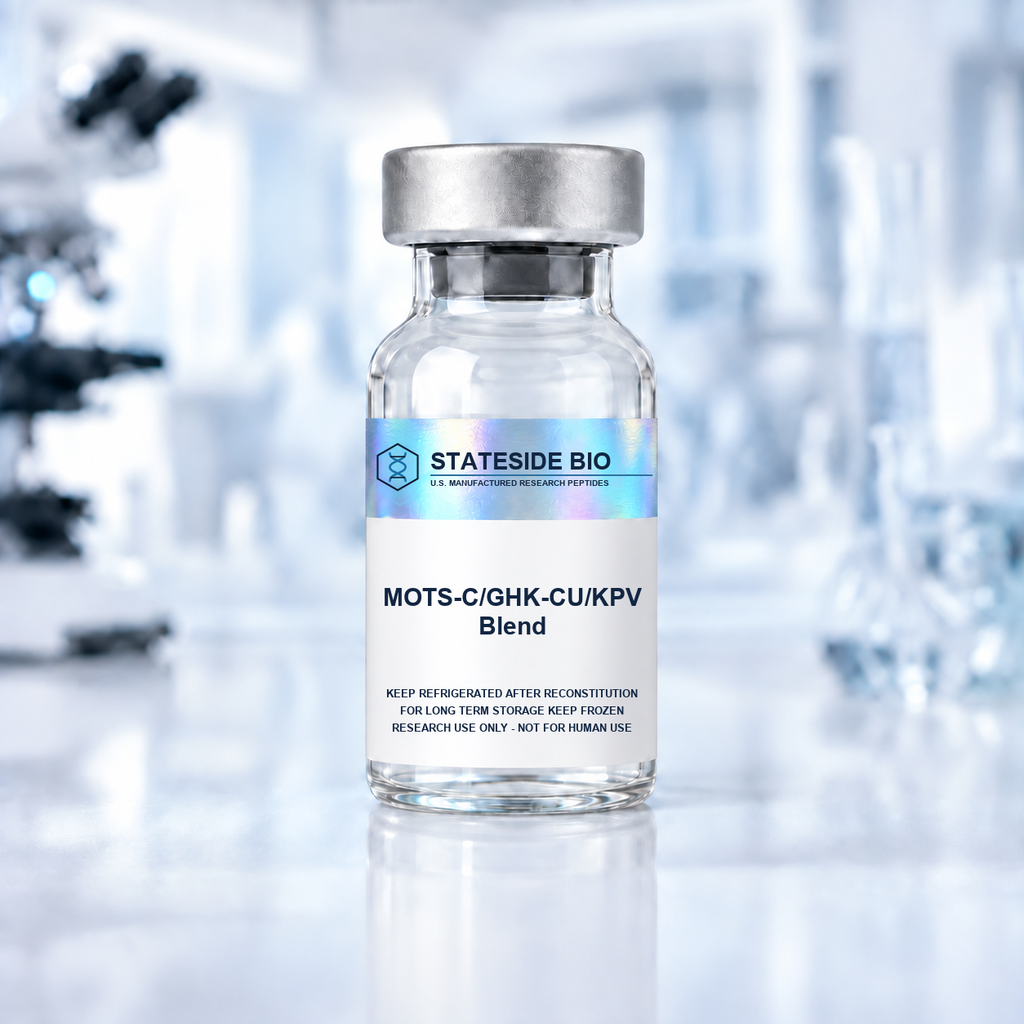
MOTS-C/GHK-CU/KPV Blend is a multi-peptide research formulation designed for controlled laboratory investigation. This blend combines three well-studied peptide
Pricing and ordering are available to approved research accounts.
🔒 Secure checkout💳 Powered by XRay Payment
MOTS-C/GHK-CU/KPV Blend Research Peptide Formulation
Overview of the Research Peptide Blend
The MOTS-C/GHK-CU/KPV Blend is a synthetic peptide formulation developed for controlled laboratory research. This blend combines MOTS-C (40mg), GHK-CU (25mg), and KPV (20mg) into a single, defined compound that supports structured peptide analysis. Researchers use this formulation to explore signaling activity, peptide interaction patterns, and sequence-based behavior in consistent experimental settings.
By combining these peptides into one formulation, researchers can observe multi-peptide dynamics that often remain hidden in single-compound studies. As a result, this approach supports clearer comparisons and more reliable research outcomes. In addition, the defined ratios help maintain steady conditions across study phases.
MOTS-C Research Applications
MOTS-C is a mitochondria-derived peptide widely referenced in cellular signaling and metabolic pathway research. Researchers include MOTS-C at 40mg to support precise measurement and repeatable workflows. In laboratory studies, MOTS-C plays a key role in examining how cells communicate and respond to metabolic signals.
Researchers commonly study MOTS-C for:
• Cellular communication pathway analysis
• Metabolic signaling research models
• Mitochondrial peptide behavior studies
Because of its higher concentration, MOTS-C allows researchers to maintain consistency across multiple test conditions.
GHK-CU Peptide Research Applications
GHK-CU is a copper-binding peptide commonly studied in molecular and cellular research. Researchers include GHK-CU at 25mg to allow balanced interaction with other peptides in the formulation. As a result, researchers can observe how signaling responses shift when peptides interact within the same model.
Common GHK-CU research areas include:
• Peptide interaction studies
• Cellular response observation
• Molecular signaling behavior analysis
In addition, GHK-CU adds flexibility to the overall research design.
KPV and Peptide Interaction Studies
KPV is a short peptide fragment often studied for its role in signaling control and peptide interaction modeling. Researchers include KPV at 20mg to support focused evaluation of sequence-specific behavior. Because of its defined structure, KPV works well in controlled laboratory environments.
Researchers value KPV for:
• Sequence-specific signaling evaluation
• Peptide communication modeling
• Controlled laboratory research compatibility
Together, the peptides in this formulation create a clear framework for studying combined peptide behavior while maintaining consistency, clarity, and repeatable research conditions.
Overview of the Research Peptide Blend
The MOTS-C/GHK-CU/KPV Blend is a synthetic peptide formulation developed for controlled laboratory research. This blend combines MOTS-C (40mg), GHK-CU (25mg), and KPV (20mg) into a single, defined compound that supports structured peptide analysis. Researchers use this formulation to explore signaling activity, peptide interaction patterns, and sequence-based behavior in consistent experimental settings.
By combining these peptides into one formulation, researchers can observe multi-peptide dynamics that often remain hidden in single-compound studies. As a result, this approach supports clearer comparisons and more reliable research outcomes. In addition, the defined ratios help maintain steady conditions across study phases.
MOTS-C Research Applications
MOTS-C is a mitochondria-derived peptide widely referenced in cellular signaling and metabolic pathway research. Researchers include MOTS-C at 40mg to support precise measurement and repeatable workflows. In laboratory studies, MOTS-C plays a key role in examining how cells communicate and respond to metabolic signals.
Researchers commonly study MOTS-C for:
• Cellular communication pathway analysis
• Metabolic signaling research models
• Mitochondrial peptide behavior studies
Because of its higher concentration, MOTS-C allows researchers to maintain consistency across multiple test conditions.
GHK-CU Peptide Research Applications
GHK-CU is a copper-binding peptide commonly studied in molecular and cellular research. Researchers include GHK-CU at 25mg to allow balanced interaction with other peptides in the formulation. As a result, researchers can observe how signaling responses shift when peptides interact within the same model.
Common GHK-CU research areas include:
• Peptide interaction studies
• Cellular response observation
• Molecular signaling behavior analysis
In addition, GHK-CU adds flexibility to the overall research design.
KPV and Peptide Interaction Studies
KPV is a short peptide fragment often studied for its role in signaling control and peptide interaction modeling. Researchers include KPV at 20mg to support focused evaluation of sequence-specific behavior. Because of its defined structure, KPV works well in controlled laboratory environments.
Researchers value KPV for:
• Sequence-specific signaling evaluation
• Peptide communication modeling
• Controlled laboratory research compatibility
Together, the peptides in this formulation create a clear framework for studying combined peptide behavior while maintaining consistency, clarity, and repeatable research conditions.
Reviews
★
No reviews yet
Be the first to share your thoughts on this product.
Write a review
★★★★★